10 Signs Your Elderly Parent With Dementia Needs More Support at Home (2026)

It often starts gradually. A forgotten medication here. A missed meal there. A phone call where they seem confused but then recover.
As a family member living away, you tell yourself it is just a bad day. And then another one. And another.
Knowing when to step in — and what support is actually available — is one of the hardest decisions Australian families face. This guide is written specifically for families whose elderly parent has been diagnosed with dementia and is still living at home.
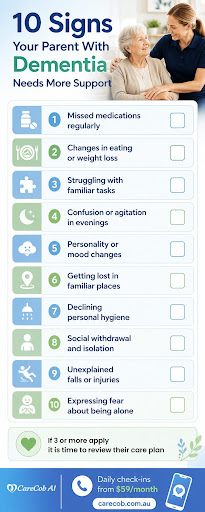
💙 Quick summary: The 10 signs to watch for: missed medications, changes in eating, difficulty with familiar tasks, increased confusion especially in the evening, changes in mood or personality, getting lost, poor hygiene, isolation and withdrawal, unexplained falls or injuries, and expressing fear or anxiety about being alone.If you notice 3 or more of these regularly — it is time to reassess your parent's care plan and look at what additional support is available.
1. Understanding Dementia Progression at Home
Dementia is progressive. The care needs of someone in early-stage dementia are very different from someone in mid or late stage. Most families find themselves caught off guard when the transition happens — not because they weren't watching, but because it happens gradually and then suddenly.
In Australia, 446,500 people currently live with dementia. The majority — around 70% — live at home, not in residential care. This means hundreds of thousands of Australian families are navigating daily care decisions right now.
The goal of this guide is not to alarm you. Most people with dementia can continue living at home safely for years with the right aged care at home support in place.
2. The 10 Warning Signs That Support Needs to Increase
These signs do not necessarily mean your parent needs residential care. They mean the current level of support is no longer enough — and the care plan needs to be reviewed.
Sign 1 — Missed Medications
This is the most common and one of the most dangerous. Medications for heart conditions, diabetes, blood pressure, and dementia itself must be taken consistently. If your parent is skipping doses, doubling up by accident, or confused about their medication schedule — this is a critical red flag that requires immediate attention.
Sign 2 — Changes in Eating
Weight loss, an empty fridge, evidence of spoiled food being eaten, or no memory of having meals are all serious signs. Nutrition directly affects cognitive function — poor nutrition accelerates dementia progression.
Sign 3 — Difficulty With Familiar Tasks
When your parent struggles with tasks they have done thousands of times — making a cup of tea, using the phone, operating the TV — this indicates significant cognitive decline. These are not memory lapses. These are functional losses.
Sign 4 — Increased Confusion in the Evening (Sundowning)
'Sundowning' — increased confusion and agitation in the late afternoon and evening — is common in dementia. If your parent regularly becomes distressed, disoriented, or frightened as evening approaches, their care plan needs to include evening support.
Sign 5 — Personality or Mood Changes
Depression, increased anxiety, withdrawal, suspicious behaviour, or uncharacteristic aggression are all signs of dementia progression. These are neurological changes — not character flaws. They indicate the brain is under increasing stress.
Sign 6 — Getting Lost in Familiar Places
If your parent has become disoriented walking to a nearby shop, within their own neighbourhood, or even within their own home — this is a safety emergency. Wandering is one of the most dangerous behaviours associated with dementia.
Sign 7 — Declining Personal Hygiene
When someone with dementia stops bathing, wearing clean clothes, or brushing teeth — it is rarely laziness or stubbornness. It is usually that they have forgotten the sequence of steps involved, or feel confused and frightened by the process.
Sign 8 — Social Withdrawal
Withdrawal from activities they once enjoyed, reluctance to speak on the phone, no contact with friends or community — loneliness and social isolation accelerate cognitive decline in dementia patients. Daily social contact is not a luxury. It is care.
Sign 9 — Unexplained Falls or Injuries
Falls are the leading cause of injury-related death in elderly Australians. One fall — especially a hip fracture — can permanently alter someone's trajectory. If your parent has fallen once, the risk of a second fall is significantly higher.
Sign 10 — Expressing Fear or Anxiety About Being Alone
When your parent tells you they are frightened when alone — or you notice they are anxious before you leave after a visit — this is telling you directly that their current support is not enough. Believe them.
3. What Support Is Available in Australia — 2026
If you have noticed several of these signs, the next step is to review what support is available — not to move your parent into residential care, but to increase in-home support to a level that is safe.
Dementia Supplement Under Support at Home
This is one of the most important and least-known funding supplements available to Australian families.
The Australian Government provides a Dementia and Cognition Supplement for people living with dementia who are receiving Support at Home (previously Home Care Packages). This supplement provides additional funding — on top of the standard classification amount — specifically for dementia-related care needs.
For 2025-26, the dementia supplement adds approximately $108 per fortnight to the standard funding — which provides additional hours of care specifically targeting the cognitive support needs of your parent.
💰 How to access the dementia supplement
You do not automatically receive this supplement — you need to apply through your Support at Home provider. Your parent must have a confirmed dementia diagnosis and be receiving Support at Home funding.Ask your provider specifically: 'Is my parent eligible for the Dementia and Cognition Supplement?' Many providers do not proactively apply for this on your behalf.For full details visit servicesaustralia.gov.au or speak to your My Aged Care coordinator on 1800 200 422.
What Additional Services Can Help
- Increased personal care hours: Help with showering, dressing, and morning routine — where most dementia-related difficulties occur
- Overnight or after-hours care: Especially important for sundowning — having someone present in the evenings significantly reduces anxiety and risk
- Respite care: Temporary residential care that gives family carers a break — essential to prevent carer burnout
- Daily phone check-ins: Structured daily contact that provides medication reminders, friendly conversation, and a safety check — reducing the gap between carer visits
- Dementia-specific day programmes: Community programmes designed specifically for people with dementia — providing structured activity, social connection, and routine
- Home modifications: Grab rails, improved lighting, door alarms, and GPS tracking devices — simple changes that dramatically improve safety
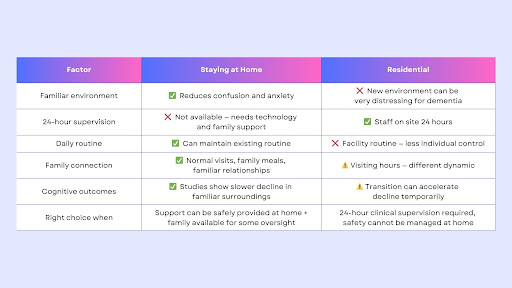
4. Should My Parent Stay at Home or Move to Residential Care?
This is the real question most families arrive at when they see multiple signs from the list above. And there is no single right answer — it depends on your parent's specific needs, their wishes, your family situation, and what support is realistically available.
What the research does consistently show is this: most people with dementia do better at home for longer than families expect — when the right support is in place.
| Factor | Staying at Home | Residential Care |
|---|---|---|
| Familiar environment | Reduces confusion and anxiety | New environment can be very distressing for dementia |
| 24-hour supervision | Not available — needs technology and family support | Staff on site 24 hours |
| Daily routine | Can maintain existing routine | Facility routine — less individual control |
| Family connection | Normal visits, family meals, familiar relationships | ⚠️ Visiting hours — different dynamic |
| Cognitive outcomes | Studies show slower decline in familiar surroundings | ⚠️ Transition can accelerate decline temporarily |
| Right choice when | Support can be safely provided at home + family available for some oversight | 24-hour clinical supervision required, safety cannot be managed at home |
5. How CareCob Helps Families Caring for Someone With Dementia at Home
One of the hardest aspects of dementia care is what happens between carer visits — the hours your parent is alone, without medication reminders, without anyone checking in, without a familiar voice.
For families living far away, this gap is where most of the anxiety lives. And for the person with dementia, this gap is where most of the danger lives.
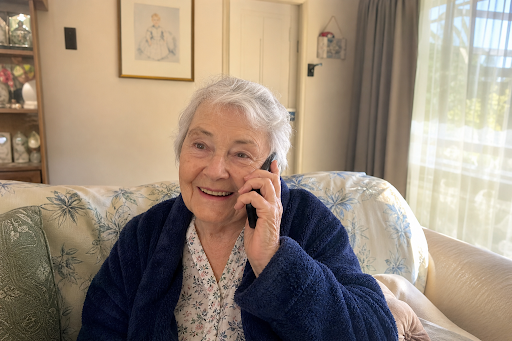
CareCob's AI companion Grace calls your parent every day — on their regular phone. They just answer. No app. No technology to learn. Grace has been designed specifically to work for elderly people with cognitive challenges.
| Dementia challenge | How Grace helps |
|---|---|
| Forgetting to take medications | Grace provides a daily medication reminder — at the same time every day, in a warm and familiar way |
| Feeling confused and anxious when alone | A daily phone call provides familiar, consistent contact — reducing sundowning anxiety |
| Family cannot tell if parent is declining | Daily mood and wellbeing data from Grace helps family spot changes in cognitive state early |
| Loneliness between carer visits | Daily friendly conversation — the same warm voice, every day — reduces isolation |
| Family worries constantly | Daily SMS update means family knows their parent is okay without calling multiple times a day |
CareCob plans start from $59 AUD — Credit you use as you go. Top up anytime. Your first 30 minutes are free. Visit carecob.com.au — or speak to your Support at Home provider about including CareCob as part of your parent's social support and daily monitoring plan.
Frequently Asked Questions
What are the signs that someone with dementia needs more care?▼
The main signs include: missed medications, changes in eating or weight loss, difficulty with familiar tasks, increased confusion especially in evenings (sundowning), personality changes, getting lost, poor personal hygiene, social withdrawal, unexplained falls, and expressing fear about being alone. If you notice three or more of these regularly, a care plan review is needed.
Is there extra funding available for dementia care at home in Australia?▼
Yes. The Dementia and Cognition Supplement provides additional Support at Home funding — approximately $108 per fortnight on top of your standard classification amount — specifically for people with dementia. You must have a confirmed dementia diagnosis and be receiving Support at Home funding. Ask your provider to apply for this supplement if they have not already done so.
Can someone with dementia stay living at home safely?▼
Yes — most people with dementia can continue living at home safely for years with the right support. Around 70% of Australians with dementia live at home. The key is having adequate daily monitoring, medication management, and regular social contact in place. Technology like daily AI companion calls can supplement in-person care to extend the time someone can safely remain at home.
What is sundowning in dementia?▼
Sundowning refers to increased confusion, anxiety, and agitation that occurs in the late afternoon and evening in people with dementia. It is a neurological symptom, not a behavioural choice. If your parent regularly becomes distressed in the evenings, their care plan should include evening support — whether from a carer or through a daily check-in service like CareCob.
How do I get a dementia supplement for my parent's home care package?▼
Contact your Support at Home provider and ask them to apply for the Dementia and Cognition Supplement on your parent's behalf. Your parent must have a confirmed dementia diagnosis. You can also contact My Aged Care on 1800 200 422 or visit servicesaustralia.gov.au for more information about available supplements and subsidies.
Can a daily phone call help someone with dementia?▼
Yes. Research consistently shows that regular social contact and familiar routines slow cognitive decline in people with dementia. A daily phone call — whether from a family member, carer, or AI companion like CareCob — provides structure, reduces anxiety, and gives the person with dementia a consistent, predictable interaction to look forward to. CareCob's daily calls can also serve as medication reminders and provide family with a daily update on their loved one's wellbeing.
Dementia Care at Home — Daily AI Support for Elderly Australians
Supporting families across Australia | No app needed | Plans from $59 AUD — Credit you use as you go. Top up anytime
💙 CareCob for dementia care:
Grace calls your loved one every day on their regular phone — they just answer. She checks how they are feeling, reminds them about medications, and has a warm familiar chat.You receive a daily SMS update. No technology for your parent to learn. No app. Just answer the phone.Specially designed for elderly Australians living with dementia — where routine, familiarity, and daily contact matter most.