Medical Alert Bracelets, Necklaces & Pendants: A Complete Guide for Australian Families
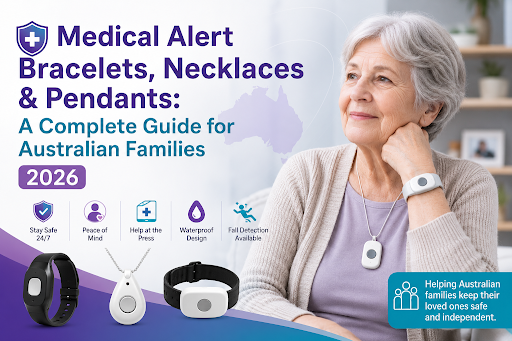
If you've been worrying about a parent living alone, a medical alert pendant or bracelet is often the first thing families look into — and for good reason. They're simple, affordable, and can bring real peace of mind. But there are more options than most people realise, the prices vary a lot, and there's one honest catch worth knowing before you buy.
This guide covers everything Australian families need to know: how they work, what they cost in 2026, how to choose, and what to do if your loved one simply won't wear one.
Quick answer for busy families: 💙 Quick answer for busy families: A medical alert pendant or bracelet is a wearable button (and often automatic fall detection) that calls for help when pressed or when a fall is detected. In Australia they start around $89 one-off for unmonitored versions, or roughly $25–40/month for monitored options. The best one is the one your loved one will actually wear.
What is a medical alert bracelet or pendant?
It's a small wearable device — worn on the wrist like a bracelet, or around the neck like a pendant — with a button that calls for help. Depending on the model, pressing it connects to either:
- A 24/7 monitoring centre (trained operators respond, then call emergency services or family), or
- Your nominated family members directly (the device rings your phones)
Many 2026 models also include automatic fall detection — sensors that detect a fall and call for help even if the person can't press the button.
Bracelet vs necklace vs pendant — what's the difference?
They do the same job; the difference is how they're worn, and it matters more than you'd think — because comfort decides whether it actually gets worn.
- Pendant/necklace hangs around the neck. Easy to reach, but some people find it uncomfortable or feel it "looks medical."
- Bracelet/wristband worn like a watch. More discreet, harder to lose, and often more acceptable to people who dislike the pendant look.
- Clip-on versions attach to a belt or pocket for people who won't wear either.
The right choice comes down to what your loved one will comfortably wear every day, including in the shower (many falls happen in the bathroom, so waterproofing matters).
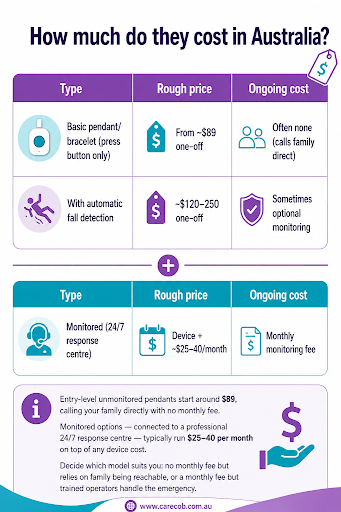
How much do they cost in Australia?
| Type | Rough price | Ongoing cost |
|---|---|---|
| Basic pendant/bracelet (press button only) | From ~$89 one-off | Often none (calls family direct) |
| With automatic fall detection | ~$120–250 one-off | Sometimes optional monitoring |
| Monitored (24/7 response centre) | Device + ~$25–40/month | Monthly monitoring fee |
Entry-level unmonitored pendants start around $89, calling your family directly with no monthly fee. Monitored options — connected to a professional 24/7 response centre — typically run $25–40 per month on top of any device cost. Decide which model suits you: no monthly fee but relies on family being reachable, or a monthly fee but trained operators handle the emergency.
What to look for when choosing
- Automatic fall detection — so it works even if they can't press the button.
- Waterproofing — essential for the bathroom, where many falls happen.
- Range — if unmonitored/home-based, check it covers the whole house and garden.
- Battery life — longer is better; some pendants last months, others need regular charging.
- Comfort and appearance — the single biggest factor in whether it gets worn.
- Who it calls — family direct (no fee) or a monitoring centre (monthly fee).
Can you get one funded?
Possibly. Eligible older Australians may access support toward safety devices through the Support at Home programme, the Commonwealth Home Support Programme (CHSP), the NDIS, or state-based schemes. It's worth checking with My Aged Care (1800 200 422) before paying full price. For more on what your funding covers, see our guide on home care services.
The honest catch: it only works if they wear it
Here's what catches families out. A pendant or bracelet — however good — only helps if it's actually worn. And a surprising number end up in a drawer or on the bedside table because:
- It feels like a label that says "I'm frail"
- It's uncomfortable, so it comes off at night (when falls often happen)
- They simply forget, or don't like wearing "a device"
If your loved one is happy to wear one, a good pendant is genuinely valuable and affordable. But if they're proud and independent — and many older people are — you may find the device you bought sits unused. That's worth thinking about before you spend the money.
If they won't wear a device: a different approach
If you suspect a pendant will end up unworn, or your bigger worry isn't only falls but whether anyone's actually checking on your loved one each day, there's another option that needs nothing worn or charged.
A daily check-in call. Instead of a device waiting for an emergency, someone calls your loved one every day on their normal phone — checks they're okay, has a friendly chat, reminds them about medications if needed, and updates the family afterwards. If they don't answer, the family is alerted.
This is what CareCob does. Grace, an AI companion, phones your loved one each day — no app, no pendant, nothing to wear or charge. It works on their existing phone, even a basic landline. To see how it works, visit how it works.
| Medical alert pendant | CareCob daily call | |
|---|---|---|
| Needs wearing | Yes | No — their normal phone |
| Detects a fall | Some models | No |
| Daily contact & wellbeing check | No | Yes |
| Medication reminders | No | Yes |
| Companionship | No | Yes |
| Family updates | On alert only | Every day |
| Cost | From ~$89 (+ maybe monthly) | From $59, credit you use as you go |
To be clear: CareCob isn't a fall detector, and we won't pretend it is. If your loved one's main risk is falling and being unable to call for help, a pendant with fall detection matters. But if the real worry is isolation, missed medication, and simply knowing they're okay — or if they won't wear a device — a daily call fills a gap a pendant can't. Many families use both: a pendant for emergencies, a daily call for everything in between.
The bottom line
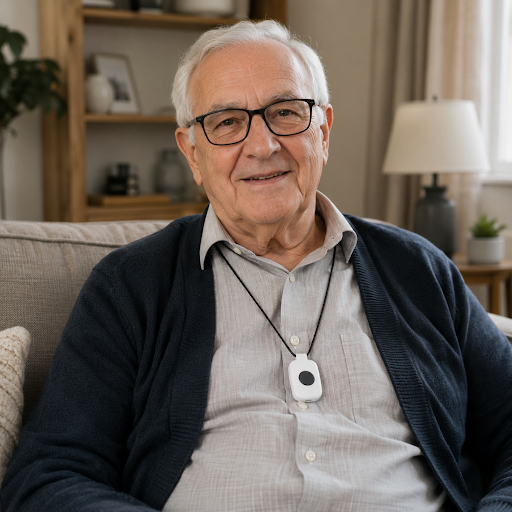
Medical alert bracelets and pendants are an affordable, sensible option for an older person who'll wear one — especially with fall detection and waterproofing, and if you check funding first. The choice between bracelet, necklace or pendant comes down to comfort, because comfort decides whether it's worn at all.
But be honest with yourself about whether they'll wear it. If not, a daily check-in call may do more for everyone's peace of mind — with nothing to wear, charge, or resist.
You can try CareCob's first 30 minutes free — Grace just calls their normal phone. Nothing to set up.
Frequently asked questions
What's the difference between a medical alert bracelet and a pendant?▼
They do the same job — the difference is how they're worn. A bracelet sits on the wrist (more discreet, harder to lose); a pendant hangs around the neck (easier to reach). The best one is whichever your loved one will comfortably wear every day.
How much does a medical alert pendant cost in Australia?▼
Basic unmonitored pendants start around $89 one-off with no monthly fee. Monitored options connected to a 24/7 centre typically cost $25–40 per month plus any device cost.
Do medical alert pendants detect falls automatically?▼
Many 2026 models do, using motion sensors. Fall detection is very good but not perfect — treat it as a strong safety layer, not a guarantee.
What if my parent won't wear a pendant?▼
This is very common. If they resist wearable devices, a daily check-in call (like CareCob) is often the better option, because there's nothing to wear or charge — it simply calls their normal phone.
Can I get a medical alert pendant funded?▼
Possibly, through Support at Home, CHSP, NDIS or state programs for eligible people. Contact My Aged Care on 1800 200 422 to check.
Related guides
This article is general information, not medical or financial advice. For personalised guidance on aged care and funding, contact My Aged Care on 1800 200 422.