How Can I Check on My Elderly Mum Every Day When I Live Far Away?
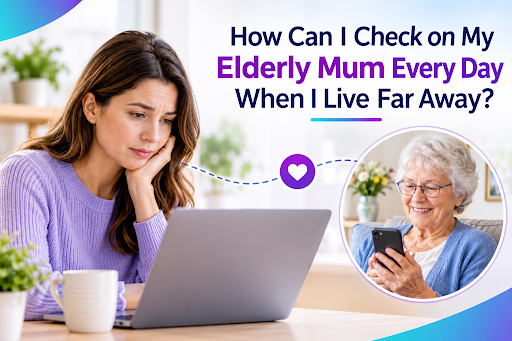
If you are reading this, chances are you have felt that quiet knot of worry in your stomach. Your mum lives on her own, maybe in another suburb, another city, or even another state, and you cannot be there each day to see how she is doing. You call when you can, you visit when life allows, but between those moments there is a gap, and in that gap live all the “what ifs.” What if she has a fall and no one knows? What if she forgets her medication? What if she is lonely and simply will not say so?
Caring for an ageing parent from a distance is one of the hardest, most emotionally draining situations an adult child can face. You love her, you want her to stay independent in her own home, and yet you cannot switch off the fear that something will go wrong while you are hours away. The good news is that you are not powerless, and you do not have to choose between her independence and your peace of mind. This guide walks you through practical, realistic ways to check on your elderly mum every single day, even from far away, and shows you how CareCob was built to solve exactly this problem for families like yours.
Why Distance Makes Caring So Difficult?
Before we get to solutions, it helps to name why this is so hard, because understanding the problem is the first step to fixing it.
When you live close by, you pick up on things without even trying. You notice that the fridge is emptier than usual, that your mum seems a little flat, that she is wearing the same cardigan she had on three days ago, or that the mail is piling up. These tiny signals are early warnings, and proximity lets you catch them before they become emergencies.
Distance strips all of that away. A weekly phone call tells you only what your mum chooses to share, and most mums of a certain generation share remarkably little. “I’m fine, love” is the universal answer, offered whether she has had a lovely week or a frightening one. She does not want to be a burden. She does not want you to worry. She does not want to admit that things are getting harder. So she smooths it over, and you are left reading between the lines of a short conversation, trying to guess how she really is.
On top of that, you are almost certainly juggling a full life of your own. Work, children, a partner, a household, your own health. The mental load of long-distance caring sits on top of all of it, a constant background hum of guilt and anxiety that never quite goes away. Many adult children describe lying awake at night, phone on the bedside table, half-expecting a call. That is no way to live, for you or for her.
The heart of the problem is simple. You need a reliable way to know, every day, that your mum is safe, well, and cared for, without having to physically be there and without turning every phone call into an interrogation. That is exactly the need CareCob was created to meet.

What “Checking In” Really Needs to Cover?
Not all check-ins are equal. A quick text that says “you ok mum?” is better than nothing, but it does not really tell you what you need to know. A proper daily check-in, the kind that genuinely protects your mum and sets your mind at ease, covers several things at once.
It confirms she is safe and well today, not last week. It gives her a moment of real human connection, because loneliness is not a minor issue; it affects mood, sleep, appetite and even physical health. It makes sure she has taken her medication, since missed or doubled doses are one of the most common and most preventable reasons older people end up in hospital. It notices changes over time, because the slow slide, a little less energy, a slightly lower mood, a few more forgotten things, is often more telling than any single bad day. And finally, it keeps you informed, so you are not guessing but actually knowing how she is.
Most do-it-yourself approaches cover one or two of these at best. The strength of a service like CareCob is that it covers all of them, every day, without exhausting you in the process. Let us look at the realistic options first, and then at how CareCob brings them together.
The Everyday Ways Families Try to Stay Connected
When families first grapple with long-distance caring, they usually reach for a handful of familiar tools. Each has a place, and each has limits worth understanding.
The Daily Phone Call
The most natural instinct is to call every day. And phone calls matter enormously; hearing your mum’s voice is reassuring in a way nothing else is. But daily calls are hard to sustain when you have a demanding life, time zones or work hours get in the way, and the responsibility falls entirely on you. Miss a day because you were swamped, and the guilt creeps in. Worse, a cheerful chat does not always surface the things you most need to know, because, as we said, “I’m fine” is her default. The daily call is lovely, but as your only safety net it is fragile, because it depends entirely on you never dropping the ball.
Video Calls and Smartphones
Video calling adds a valuable layer, because you can actually see your mum, read her face, and glance at her surroundings. The catch is that many older people find smartphones and video apps confusing or frustrating. Setting it up, keeping it charged, answering at the right moment, dealing with updates, it can all become another source of stress rather than connection. Video calls are wonderful when they work, but they are not something you can rely on happening automatically every day.
Asking Neighbours, Friends or Family Nearby
If your mum has a kind neighbour, a nearby friend, or another relative who can drop in, that is genuinely valuable. Local eyes make a real difference. But it is also an imposition that is difficult to ask for daily, people have their own lives, and it is unreliable by nature. You cannot roster a neighbour to guarantee a check every single day, and you certainly cannot expect them to track medication or notice subtle changes in mood over months.
Alarms and Wearable Buttons
Many families consider a personal alarm or pendant your mum can press in an emergency. These can help in a genuine crisis, but they are fundamentally reactive, they only work if she presses the button, remembers to wear it, and is conscious and able to do so. They do nothing for the daily reassurance, the companionship, the medication prompts, or the early warning signs that matter most. An alarm waits for disaster; it does not prevent the slow decline or ease the loneliness.
Each of these tools has value, but notice the pattern. Every one of them is either unreliable, places the whole burden on you, depends on technology your mum may struggle with, or only reacts after something has already gone wrong. What families really need is something proactive, consistent, effortless for mum, and informative for you. That is precisely the gap CareCob fills.
A Better Way: Daily Check-Ins With CareCob
CareCob was designed from the ground up for the exact situation you are in, an adult child who loves their mum, wants her to stay independent at home, and needs to know every day that she is okay, without being there in person and without the whole thing resting on their shoulders.
At the centre of CareCob is Grace, a warm, patient and friendly AI companion who phones your mum every day for a genuine conversation. There is no app for your mum to learn, no video call to answer, no device to charge or set up, and no new technology to master. Grace simply rings the ordinary phone your mum already uses, the landline or mobile she is completely comfortable with, and talks with her, naturally and kindly.
That single, simple idea solves the problems the other options cannot. Here is how CareCob checks on your mum every day on your behalf, and keeps you in the loop.
A Daily Call That Actually Happens
The beauty of CareCob is consistency. Grace calls every day, without fail, regardless of how busy your week is or what time zone you are in. You are no longer the single point of failure. Even on the days you cannot call yourself, your mum still receives a friendly, caring check-in. For her, it becomes a comforting part of the daily routine, a moment she can look forward to. For you, it means the daily safety net is always there, whether or not you were able to pick up the phone.
Real Companionship That Eases Loneliness
Loneliness is not a soft issue. For older people living alone, long stretches with no one to talk to can quietly erode mood, motivation, sleep and overall health. One of the most powerful things CareCob does is simply give your mum someone to talk to each day. Grace listens, chats, asks about her day, and offers warm, unhurried conversation. That daily point of connection can genuinely brighten her days and help her feel less alone, which matters just as much as any practical check. You are not only confirming she is safe; you are giving her companionship.
Gentle Medication Reminders
If your mum takes medication, you probably worry about whether she is taking it correctly, the right tablets, at the right time, without missing or doubling up. CareCob weaves gentle medication reminders into the daily call, prompting her to take her medicine when she should. Instead of you sending anxious texts or trying to remember her schedule from afar, Grace handles the daily prompt in a kind, natural way. This is one of the most practical protections there is, because medication mistakes are both common and genuinely dangerous for older people, and a reliable daily reminder helps keep your mum safe and, quite possibly, out of hospital.
Wellbeing Monitoring That Spots Changes Early
This is where CareCob goes far beyond a simple phone call. The service monitors your mum’s wellbeing over time and uses voice-based insight to pick up on subtle changes in her mood and tone, the very signals she would never put into words herself. If something seems off, if she sounds low, unusually tired, or not quite herself, the pattern is captured rather than missed. Because the calls happen daily, CareCob can notice the slow, quiet changes that are so easy to overlook from a distance, giving you the chance to step in early rather than after a crisis.
Updates That Keep You Genuinely Informed
Perhaps the greatest relief for a far-away son or daughter is simply knowing. After each check-in, CareCob keeps you informed through SMS updates and a simple family dashboard, along with regular wellbeing summaries. You can see at a glance how your mum has been, whether she has been eating, sleeping well, taking her medication, and feeling upbeat, or whether something needs your attention. Instead of guessing from a short weekly chat, you get a clear, honest, ongoing picture. That is the difference between lying awake wondering and resting easy because you actually know.
Reaching Her Wherever She Lives
Distance is not only about the city you live in; it is also about where your mum lives. CareCob works right across Australia, including regional and remote areas that are so often poorly served by in-person services. Whether your mum is in a major city or a small country town hours from anywhere, the daily check-in happens just the same. Geography stops being a barrier to knowing she is cared for.
How CareCob Compares to Doing It All Yourself?
It is worth pausing to see how much lighter this makes your load. On your own, checking on your mum every day means you must remember to call, every single day, find the time around your own life, somehow coax honest answers out of her, keep track of her medication from afar, try to detect mood changes over the phone, and carry the whole responsibility alone, with all the guilt that comes when you inevitably cannot keep it up perfectly.
With CareCob, the daily call always happens, the companionship is built in, the medication reminders are handled, the wellbeing monitoring runs quietly in the background, and you receive clear updates without having to extract them. You are still absolutely central to your mum’s life, you still call, still visit, still love her, but you are no longer her only safety net, and you are no longer flying blind between visits. CareCob does the daily watching so you can go back to simply being her child.
Setting It Up Is Simple
One of the best things about CareCob is how easy it is to begin, which matters when you are already stretched thin. There is no complicated installation, no gadgets to post to your mum, and nothing for her to figure out. Because Grace calls the phone she already has, getting started is about as simple as it gets.
CareCob offers a short free trial so you can experience how the daily check-ins feel before committing, and flexible plans to suit different needs and budgets, from a lighter pay-as-you-go option to a full daily companion plan with medication reminders and complete wellbeing monitoring. You can start a free trial, book a demo to see the family dashboard and updates in action, or simply choose the plan that fits. Within a very short time, Grace can be calling your mum each day, and you can be receiving your first wellbeing update.
Looking After Yourself Too
A final word, because this matters. Caring for an elderly parent from a distance takes a real emotional toll, and you cannot pour from an empty cup. Give yourself permission to accept help rather than trying to be everything, everywhere, all at once. Share the load with siblings and other family where you can. Keep your own life, your own friendships and your own rest, because a burnt-out carer helps no one.
Part of looking after yourself is letting go of the impossible standard that says you must personally check on your mum every day or you have failed. You have not failed; you are simply human, and you live far away. Putting a reliable daily check-in in place is not giving up on your mum, it is one of the most loving and responsible things you can do, for her and for you. Knowing that Grace is calling her every day, prompting her medication, keeping her company and flagging any concerns, lifts a genuine weight off your shoulders, and lets you be present and relaxed in the time you do share.
The Bottom Line
So, how can you check on your elderly mum every day when you live far away? The honest answer is that you cannot do it all yourself, reliably, forever, and you were never meant to. The daily phone call, the occasional video chat, the kind neighbour and the emergency alarm each help a little, but none of them delivers the consistent, caring, informative daily check-in that truly protects your mum and sets your mind at ease.
CareCob does. With a daily phone call from Grace, real companionship that eases loneliness, gentle medication reminders, thoughtful wellbeing monitoring and clear updates to you, CareCob checks on your mum every single day, no matter how far away you live. It keeps her safe and connected in the home she loves, and it turns your daily worry into daily reassurance. If you are ready to stop lying awake wondering and start knowing your mum is okay, start your free trial with CareCob today.
Frequently Asked Questions
How can I check on my elderly mum every day if I live interstate or overseas?▼
The most reliable way is a daily check-in service that does not depend on you remembering to call around work, family and time zones. CareCob phones your mum every day through Grace, a friendly AI companion, confirms she is well, provides medication reminders, monitors her wellbeing, and sends you updates by SMS and a family dashboard, so distance no longer stops you knowing she is safe and cared for.
My mum is not good with technology. Will this work for her?▼
Yes. This is exactly who CareCob is designed for. There is no app to install, no video call to answer and no device to set up or charge. Grace simply calls the ordinary phone your mum already uses and has a natural, friendly conversation with her, so even if she finds smartphones and apps frustrating, CareCob still works effortlessly.
How will I actually know how my mum is doing each day?▼
After each daily call, CareCob sends you updates and regular wellbeing summaries through SMS and a simple family dashboard. You can see how she has been feeling, whether she has eaten, slept and taken her medication, and whether anything needs your attention, giving you a clear, honest picture instead of guessing from a short weekly chat.
Can CareCob AI remind my mum to take her medication?▼
Yes. CareCob includes gentle medication reminders as part of the daily call, prompting your mum to take the right medicine at the right time. Because missed or doubled doses are a common and preventable cause of hospital visits for older people, this daily prompt is one of the most practical ways to help keep her safe.
What if my mum is lonely rather than unwell?▼
Loneliness is one of the biggest challenges of living alone in later life, and it affects both mood and health. A central part of CareCob is companionship. Grace does not just run through checks; she has a warm, unhurried conversation with your mum each day, giving her a reliable point of connection and helping her feel less alone.
Does CareCob work in regional and remote areas of Australia?▼
Yes. CareCob works right across Australia, including regional and remote areas that are often poorly served by in-person services. Because Grace calls the phone your mum already has, where she lives does not get in the way of her daily check-in, medication reminders or wellbeing updates.
Is CareCob hard or expensive to set up?▼
Not at all. There is nothing to install and no equipment to send, because CareCob uses the phone your mum already uses. There is a short free trial so you can see how the daily check-ins feel, and flexible plans to suit different needs and budgets, so you can start simply and choose what fits your family.
Does using CareCob mean I stop calling and visiting my mum?▼
Not in the slightest. CareCob is there to support you, not replace you. You still call, still visit and still share all the moments that matter. What changes is that you are no longer your mum’s only daily safety net, so the time you spend together can be relaxed and loving rather than anxious, because you already know she is being checked on every day.